
PERFORMANCE DRIFT IN POLICING · PART 1
Police Officer Performance Drift – The Performance Framework Every Chief Should Understand
When it comes to police officer performance, the stakes could not be higher. A single decision can affect a citizen’s safety, an officer’s wellbeing, the trust a community places in its agency, and the legal exposure that follows. Police work has to be done well, and it’s remarkable how often it is, given the day-to-day risks involved.
As much as we’d like it to be, officer performance is not static. Over a career, movement on and off the top of an officer’s game is the norm. That movement is what we call drift, and by itself, it is not a sign that something has gone wrong. It is simply a signal worth paying attention to.
Most people who have worn the badge can picture it. A solid, dependable officer hits a rough stretch. They get more rattled by calls, are a little shorter with people, skip steps here and there, or submit reports with a few less details. Nothing about it indicates misconduct. It is simply a good officer experiencing some drift.
The encouraging part is that drift is usually very correctable, and often it corrects itself. But when it doesn’t, the right response depends entirely on what is driving the drift.
A fatigued officer and a dishonest officer can look the same on paper, yet they need very different responses. Agency leaders need a way to identify what type of drift is occurring, what is driving it, and a clear, prescriptive approach to responding to it.
Capacity Drift
Capacity drift is load-based. An officer’s ability to perform at their normal level is strained, not because of a skills gap and not by choice, but because of fatigue, excessive overtime, cumulative trauma exposure, personal stress, or burnout.
Picture a veteran patrol officer pulling heavy overtime to cover staffing shortages while caring for an ailing parent at home. She has not changed as a person, and her skills are intact. But she is running on five hours of sleep, her patience is thinner, and her judgment on a tense call may not be what it was a month ago. Nothing here is a character or a competence problem. Her capacity is simply stretched.
The effect of that strain is measurable. Research funded by the National Institute of Justice found that rested officers outperformed tired officers in realistic, scenario-based use-of-force tests, the kind of split-second judgment the job demands.
The toll is not only operational, but also physical. The Buffalo Cardio-Metabolic Occupational Police Stress (BCOPS) study documented about a 17 percent decline in self-rated excellent or very good health over twelve years of a policing career, with compounding cardiovascular, metabolic, PTSD, and depression burden accumulating over time.
Because the driver of capacity drift is load rather than ability or intent, the response is support, not discipline. That can mean stabilizing the immediate situation, adjusting workload, providing peer support, or putting police officer wellness measures in place to restore capacity. Caught early, capacity drift is very recoverable.
Competence Drift
Competence drift is skill-based. It shows up as sloppy or degrading tactics, inconsistent policy adherence, or report quality that has slipped. The causes vary: a skill never fully built, a policy that changed without retraining, or complacency setting in.
Picture an officer with five years on the force. His reports have gotten thinner, he is skipping steps on scene, and his last pursuit raised real questions about tactics. His skills have simply drifted from where they should be, and no one has stepped in to correct it.
The response to competence drift is coaching. That means mentoring, non-disciplinary corrective supervision, skill refreshers, setting clearer expectations, and structured follow-up. The goal is realignment to mission, policy, and best practice, not punishment.
There is strong evidence that corrective intervention works. In one controlled trial of 1,049 officers using PERF’s ICAT de-escalation curriculum in Louisville, use of force dropped about 28 percent, citizen injuries about 26 percent, and officer injuries about 36 percent.
Character Drift
While capacity and competence drift are about whether an officer can perform to standards, character drift is about whether they choose to. It exists in degrees, from cutting an ethical corner to serious, deliberate violations of policy or law. The common thread is choice: it is a decision to act differently than the officer knows they should.
Picture an officer who has been coached and retrained, more than once, on submitting reports by the end of shift, and who still consistently does not do it. This is not fatigue, and it is not a skill he lacks. He knows what is expected, has been given the support to meet it, and has chosen not to.
The damage is significant. Character drift erodes public trust, internal culture, and falls hardest on the agency’s other officers. One person’s choices can undo years of work by everyone else. As Warren Buffett put it:
“It takes 20 years to build a reputation and five minutes to ruin it.”
The financial impact of character drift is well documented. One analysis of civilian allegations in Chicago found that the worst one percent of officers generated nearly five times the litigation payouts of the average officer. Missing even a handful of them can cost an agency more than it saves everywhere else combined.
Not all of the misconduct in that analysis was caused by character drift. But it shows how a small number of officers can drive a disproportionate share of the harm and cost, and how high the stakes climb when drift is unaddressed.
When the driver is a knowing violation of policy or law and coaching and support have been offered and exhausted, the response is accountability and discipline. That is not a failure of the framework, it’s proof that it works. It reserves discipline for when it’s truly called for, instead of applying it to officers who needed support or coaching instead.
Why Catching Drift Early Matters
The three types of drift do not live in isolation. Capacity drift left undetected can erode performance until it begins to look like character drift. Competence drift left uncorrected compounds over time. Both carry real safety implications for the officer, the public, and fellow officers.
Consider the officer from earlier, the one stretched thin by overtime and a sick parent. If no one notices, the short temper becomes a complaint, the complaint becomes a pattern, and a year later that officer is in front of a disciplinary board for conduct that started as exhaustion. What began as correctable became career-ending, not because the officer was a bad person, but because the drift was never addressed. Small course corrections made early are far easier than major ones made late.
Catching Drift Before It Hardens
The drift framework gives supervisors something most performance conversations lack: a way to match the response to the actual problem. But knowing what drift looks like is not the same as catching it early. Some officers recognize their own drift and self-correct. Others do not, and they need someone or something to surface the drift before it deepens.
This is where the right early intervention systems come in. At its best, it can be a non-punitive, non-disciplinary way to surface capacity and competence drift while the course correction is still small. Not every system does this equally well, and what separates a research-based approach from a simple threshold-based approach is the subject of the next piece in this series.
Drift is human, and it is usually correctable. The work is to understand what is driving it, respond in kind, and put something in place to catch it early.
References
Walker, S., Alpert, G. P., & Kenney, D. J. (2001). Early Warning Systems: Responding to the Problem Police Officer. National Institute of Justice, Research in Brief (NCJ 188565).
Engel, R. S., Corsaro, N., Isaza, G. T., & McManus, H. D. (2022). Examining the impact of Integrating Communications, Assessment, and Tactics (ICAT) de-escalation training for the Louisville Metro Police Department. Center for Police Research and Policy / Police Executive Research Forum.
Rozema, K., & Schanzenbach, M. (2019). Good Cop, Bad Cop: Using Civilian Allegations to Predict Police Misconduct. American Economic Journal: Economic Policy.
James, S., & James, L. (2017). Understanding the Effects of Fatigue on Law Enforcement. National Institute of Justice (NCJ 250928).
Frequently Asked Questions
What causes police officer performance drift?
Performance drift has three drivers. Capacity drift comes from load: fatigue, overtime, cumulative trauma, personal stress, or burnout. Competence drift is skill-based: policies that changed without retraining, complacency, tactics that have degraded. Character drift is a choice: a knowing decision to act differently than the officer knows they should. Each driver requires a different response.
How do you catch officer performance drift early?
Catching drift early requires a way to surface it before it deepens. Some officers self-correct. Others need someone or something to notice the change. Supervisors catch some of it, but manual supervision alone misses cross-shift patterns and slow accumulation. Early intervention systems are designed to surface capacity and competence drift while the course correction is still small.
What is the difference between capacity, competence, and character drift?
Capacity drift is load-based: the officer can perform but is stretched by fatigue or stress. Competence drift is skill-based: tactics or policy adherence have slipped, often because retraining did not follow a policy change. Character drift is choice-based: the officer knows what is expected and chooses not to meet it. Each requires a different response: support, coaching, or accountability.
About the Author
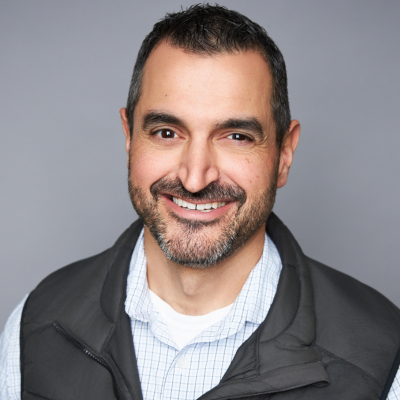
Mark Pfetzer is a Senior Leader with Benchmark Analytics and a retired law enforcement captain with more than 23 years of public safety experience. He works with law enforcement and correctional agencies across the country on risk management, organizational assessments, and the implementation of evidence-based practices that strengthen operations, improve organizational performance, and reduce liability.
Prior to joining Benchmark Analytics, Mark served as a captain with the San Juan County Sheriff’s Office. He is a graduate of the FBI National Academy and a Certified Risk Manager. His work combines practical leadership experience with research-informed strategies to help agencies improve performance, enhance officer wellness, and reduce organizational risk.