


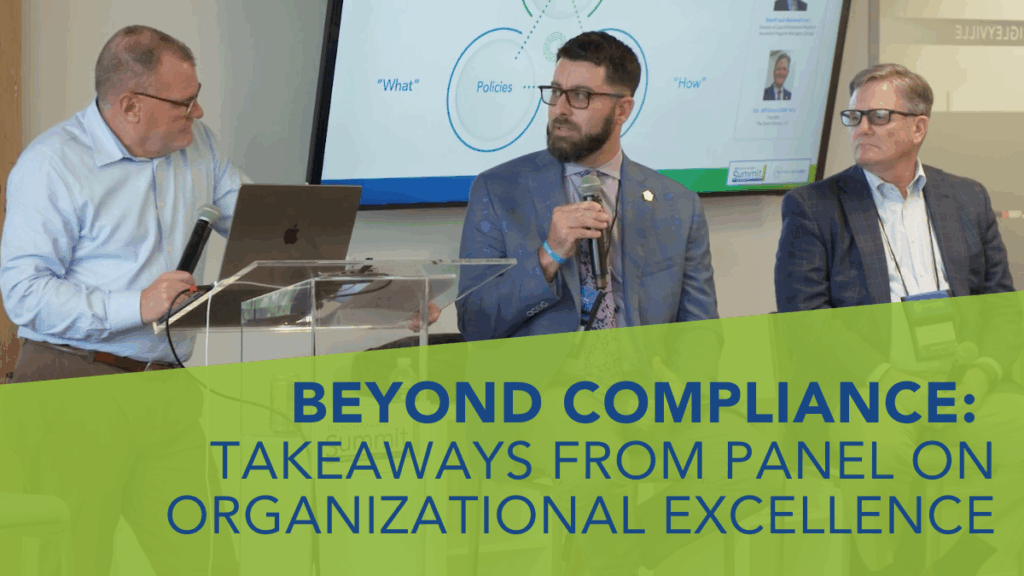
At the recent Benchmark Summit, law enforcement and corrections leaders gathered to discuss a critical question: Why do some agencies have 60% fewer incidents and claims than their peers? The answer lies in deliberate, evidence-based practices that prioritize officer wellness and organizational health.
The Illinois Counties Risk Management Trust: Leading the Way Forward
The Illinois Counties Risk Management Trust (ICRMT) recognized that law enforcement liability claims had become their number one source of losses across their 220+ law enforcement agencies. Rather than simply paying out claims, ICRMT took a proactive stance through their Agency Professionalization Model.
As Josh Blackwell, Director of Law Enforcement Practice at IPMG, which administers ICRMT, explained, they’ve invested in bringing evidence-based practices directly to their members:
- Model policies that meet state and CALEA standards
- Training for law enforcement on employment practices
- Critical incident support available 24/7
- Grant funding for equipment and technology
- Operational assessments with actionable solutions
This commitment goes beyond traditional insurance. It’s about preventing incidents before they occur. The results speak volumes: agencies embracing these practices are seeing dramatically reduced claims while building healthier organizations.
Key Themes and Actionable Takeaways
Data Opens Wallets (and Technology Multiplies Impact)
One chief successfully secured increased training budgets by presenting data showing how investment reduces liability claims. As Blackwell noted, “How can you dispute evidence-based practices?” Body cameras exemplify this – initially viewed with suspicion, they now save agencies thousands by dismissing false claims at summary judgment while providing invaluable training footage.
Your takeaway: Track everything. Use technology strategically – from body cameras to AI report writing that returns patrol hours to the streets. Show decision-makers concrete ROI.
Culture Eats Strategy for Breakfast
You can have all the right policies, but without a culture of trust and continuous improvement, they’re just words on paper. Jeff Dunn, former Alabama Corrections Commissioner, emphasized that trust is “like breathing air” – essential for any initiative to succeed.
Your takeaway: Before implementing new programs, invest in building trust. Visit every shift, listen to front-line officers, and demonstrate genuine care for their wellbeing.
Learn from Every Call, Not Just the Bad Ones
Agencies typically only review incidents when something goes wrong. The highest-performing agencies conduct brief After Action Reviews (AARs) after every shift: What went right? What went wrong? How do we improve?
Your takeaway: Start tomorrow. Implement 5-minute end-of-shift AARs. Document needs and use this data to justify budget requests.
Wellness Isn’t Soft – It’s Strategic
Annual mental health check-ups aren’t just about individual officers – they’re about organizational resilience. Agencies with robust wellness programs see dramatically reduced PTSD claims and turnover.
Your takeaway: Normalize mental health maintenance. Make it as routine as firearms qualification.
The Bottom Line
The agencies seeing 60% fewer incidents aren’t lucky. They’re intentional. They’ve moved beyond compliance to excellence, from reactive to proactive.
ICRMT’s Agency Professionalization Model provides the roadmap. The evidence-based practices are proven. The only question remaining is: Will you take the first step?
For law enforcement agencies looking to break their own cycles and build proactive officer wellness programs, understanding where your officers stand today is the critical first step. Early intervention systems, like First Sign® Precision Wellness from Benchmark Analytics, help agencies identify patterns and provide support before crisis, turning data into actionable wellness strategies. This article was created with the assistance of AI technology to help convey our commitment to improving police officer wellness through data-driven solutions.